Introduction
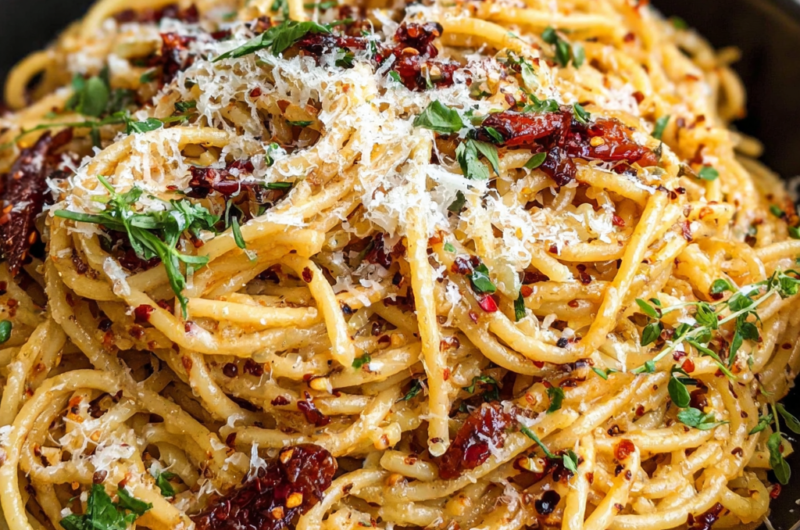
Caramelized onion pasta embodies the beauty of simplicity and indulgence in home cooking. The deep, sweet flavor of the onions serves as the foundation of the dish, transformed by a touch of chili oil that adds warmth and character.
Whether you’re whipping up a quick weeknight dinner or impressing guests with your culinary skills, this recipe balances rich flavors with a subtle heat. It invites creativity, allowing you to adapt it to your taste with ease.
Ingredients
- 12 oz spaghetti or linguine
The backbone of this dish, pasta provides a hearty base. Spaghetti or linguine works beautifully, delivering a satisfying al dente texture that complements the rich caramelized onions. - 3 large yellow onions, thinly sliced
Yellow onions are ideal for caramelizing due to their natural sweetness. As they cook low and slow, they develop a deep, complex flavor that becomes the essence of the dish. - 4 tablespoons olive oil
Olive oil not only aids in cooking the onions but also enriches the dish with its fruity notes. It allows the onions to gently cook without burning, ensuring a perfect caramelization. - 2 cloves garlic, minced
Garlic adds aromatic depth and a pungent, savory flavor. It enhances the overall taste profile, balancing the sweetness of the onions once added during cooking. - 1 teaspoon red pepper flakes
This ingredient gives the dish its signature heat. Adjusting the quantity allows you to control the spice level to your preference, making it as mild or fiery as desired. - 1/4 cup chili oil
Chili oil infuses the dish with a robust heat and a hint of smokiness, elevating the flavor of the pasta. It’s the finishing touch that ties together all components. - Salt and black pepper to taste
Basic seasoning is essential for flavor enhancement. A pinch of salt and a couple of grinds of black pepper can make all the difference in bringing the dish together. - Fresh parsley, chopped, for garnish
Parsley brings a fresh, herbal note to the plate. It also adds color and a visual appeal, making the dish look as good as it tastes.
Directions & Preparation
Step 1: Cook the pasta according to package instructions.
Start by boiling a large pot of salted water and add your pasta. Cooking it al dente is key, as the pasta will continue to cook slightly when combined with the sauce, absorbing its flavors. Reserve a cup of pasta water before draining to adjust the sauce later.
Step 2: Heat olive oil in a large skillet over medium heat.
Heating the olive oil first is crucial for caramelizing the onions effectively. As the oil warms, it will create a conducive environment for the onions to soften and begin their transformation. Ensure that the heat is medium; too high can cause burnt edges.
Step 3: Add the sliced onions, stirring frequently until caramelized, about 20-30 minutes.
This is the heart of the recipe. Stirring frequently allows even cooking and prevents burning. Patience is important here; the sugars in the onions will slowly caramelize, yielding a sweet and rich flavor. Look for a deep golden-brown color.
Step 4: Stir in the minced garlic and red pepper flakes for the last 2-3 minutes of cooking.
Adding garlic too early can lead to burning, which imparts an unpleasant bitterness. Adding it towards the end allows it to become fragrant without compromising its flavor. The red pepper flakes will release their heat at this point, adding warmth to the mix.
Step 5: Toss in the cooked pasta along with reserved pasta water, stirring to combine.
This step connects the pasta with the sauce you've created. The reserved pasta water, which is starchy, will help in forming a cohesive sauce that clings to the noodles. Toss gently to avoid breaking the pasta.
Step 6: Drizzle with chili oil and adjust seasoning with salt and pepper.
The chili oil should be added at the end to maintain its flavor and aroma. Taste and adjust with salt and pepper; remember, it’s easier to add more seasoning than to take it away. This final touch is what makes the dish truly captivating.
Step 7: Serve garnished with fresh parsley and additional chili oil if desired.
Serving the pasta with a sprinkle of fresh parsley adds a bright pop of color and freshness. Offer more chili oil on the side for those who like an extra kick. Presentation matters, so ensure each plate looks enticing.

The Art of Caramelization
Caramelizing onions is an art that pays off in flavors. The slow, gentle cooking process transforms raw onions into sweet, tender morsels that provide a savory depth to the pasta. Controlled heat is essential; too high can scorch the sugars, while too low may take forever. Attention during this step guarantees success.
Balancing Heat and Flavor
Finding the right balance of heat from the chili oil and red pepper flakes is crucial. Those who prefer mild dishes can start with small amounts, adjusting to taste as the dish develops. This flexibility allows the recipe to cater to individual spice preferences, making it accessible to everyone.
Customizing Your Dish
The beauty of this pasta lies in its versatility. You can incorporate additional ingredients such as spinach, mushrooms, or even proteins like chicken or shrimp for added nutrition and variation. Each addition will contribute unique flavors and textures, allowing you to personalize the dish according to your palate.
FAQs
What if my onions aren't caramelizing?
If your onions aren’t caramelizing, ensure your heat isn't too high and be patient. Cooking them too quickly can lead to browning rather than caramelizing. Stir often and allow them at least 20 minutes.
How can I adjust the chili oil if I find it too spicy?
To scale back on heat, reduce the chili oil added at the end or opt for a milder chili oil. You can also try adding cream or a touch of cheese to mellow the spice.
What can I do if the sauce is too thick?
If the sauce is too thick, gradually add more reserved pasta water while tossing the pasta. This will help loosen the sauce and create a silky texture.
Is there a preferred type of chili oil to use?
While any chili oil works, look for high-quality options made with real chilis and less artificial flavoring to achieve the best taste.
Can I add protein to this dish?
Absolutely! Grilled chicken or sautéed shrimp can be great additions. Just cook them separately and mix them in at the end for a complete meal.
What if my pasta is overcooked?
If the pasta is overcooked, it may become mushy when tossed with the sauce. In the future, reduce cooking time by a minute to achieve the ideal al dente texture.
Conclusion
Caramelized onion pasta with chili oil is an exquisite dish that marries simple ingredients into a memorable meal. It’s beautifully versatile, easy to make, and ideal for any occasion, from family dinners to impressing guests.
With a bit of patience in caramelizing the onions and adjusting the spice level to your liking, this recipe will soon become a favorite in your kitchen repertoire. Enjoy the process and savor every bite.
Recipe Card
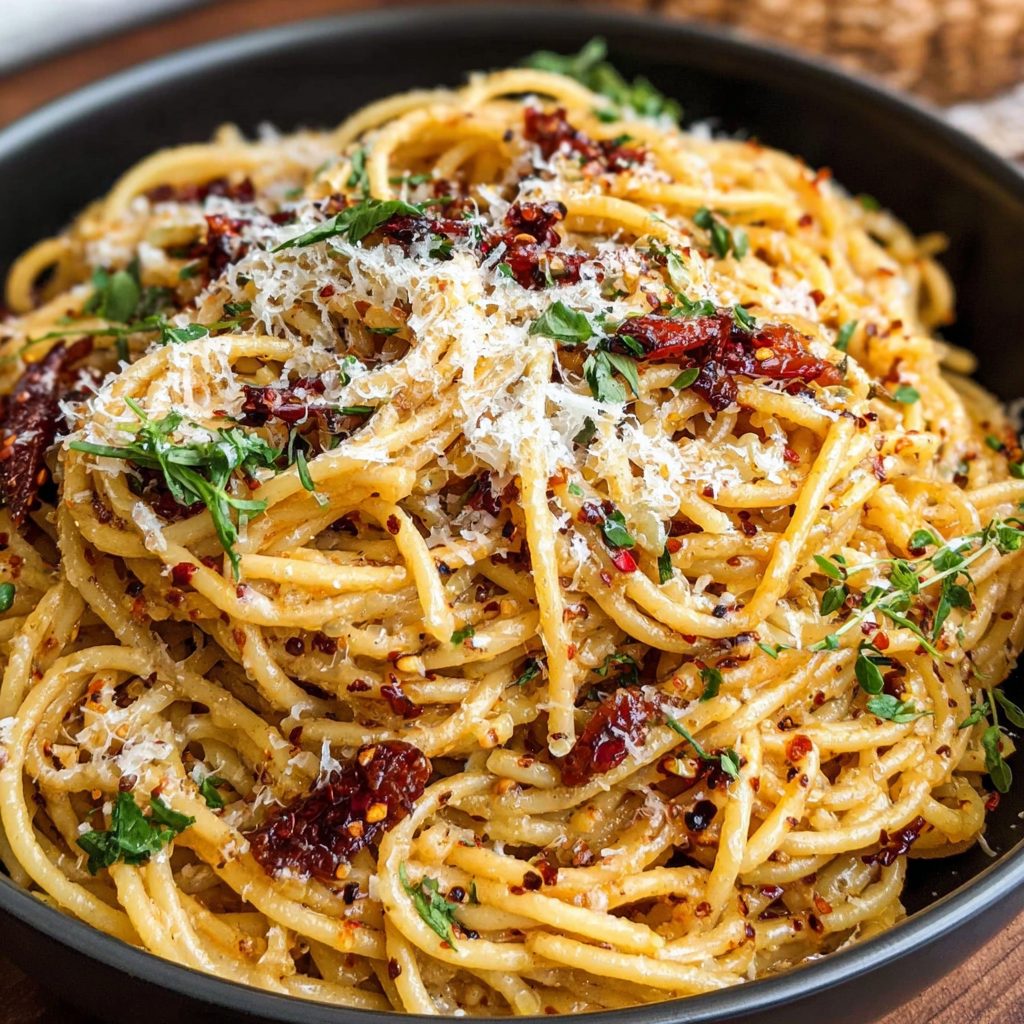
Caramelized Onion Pasta with a Kick of Chili Oil
Ingredients
Method
- Cook the pasta according to package instructions.
- Heat olive oil in a large skillet over medium heat.
- Add the sliced onions, stirring frequently until caramelized, about 20-30 minutes.
- Stir in the minced garlic and red pepper flakes for the last 2-3 minutes of cooking.
- Toss in the cooked pasta along with reserved pasta water, stirring to combine.
- Drizzle with chili oil and adjust seasoning with salt and pepper.
- Serve garnished with fresh parsley and additional chili oil if desired.
Notes
Additional serving suggestions: pair with a crisp salad, garlic bread, or roasted seasonal vegetables for balance.
For make-ahead, prep components separately and assemble just before heating to preserve texture.
Taste and adjust with acid (lemon/vinegar) and salt right at the end to wake up flavors.


