Introduction
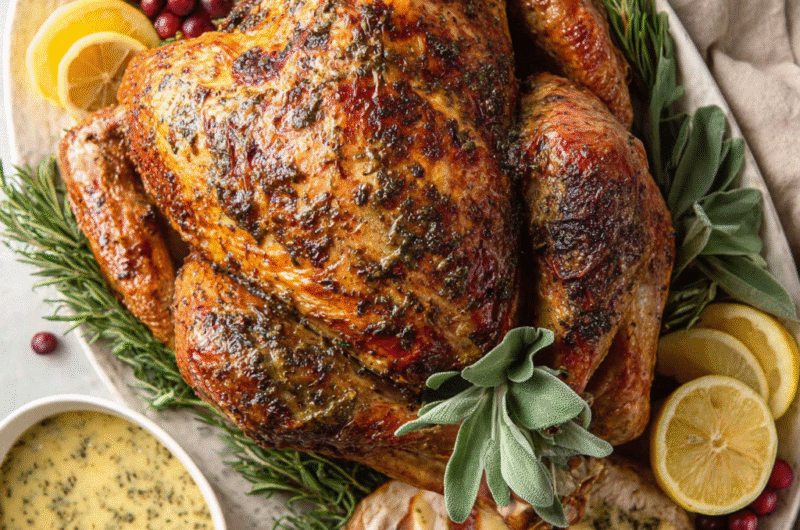
There's something undeniably special about a roast turkey gracing the table during the festive season. Its golden-brown skin, juicy meat, and fragrant herbal notes bring warmth and joy to gatherings, making every bite reminiscent of cherished traditions. This classic recipe infuses the turkey with a luscious herb butter and culminates in a rich gravy that elevates the entire meal.
Roasting a turkey may seem daunting, but with a few essential techniques and the right ingredients, you can achieve that perfect roast, impressing your family and friends. The key here is to allow the flavors of the herbs and butter to penetrate deep into the meat, ensuring that every mouthful is bursting with flavor. Let’s dive into how to create this memorable centerpiece for your Christmas feast.
Ingredients
- 1 whole turkey (12-14 lbs)
A whole turkey serves as the centerpiece of the meal. Choosing a quality bird is essential; one that is fresh or properly thawed will ensure even cooking and moisture retention. - 1 cup unsalted butter, softened
Butter adds richness and moisture to the turkey, enhancing the overall flavor. Using unsalted butter allows you to control the salt levels in your dish. - 3 tablespoons fresh rosemary, chopped
Rosemary imparts a piney, aromatic note that complements the turkey beautifully. Fresh herbs provide a more potent flavor than dried, ensuring a fragrant roast. - 3 tablespoons fresh thyme, chopped
Thyme adds earthiness to the herb butter, balancing the richness of the turkey. It works harmoniously with rosemary to create a robust flavor profile. - 3 tablespoons fresh sage, chopped
Sage offers a warm, slightly peppery flavor that enhances the turkey’s taste. This herb is classic for poultry, bringing a comforting feel to the dish. - 2 teaspoons garlic powder
Garlic powder contributes a subtle depth to the herb butter without overpowering the natural flavors of the turkey. - 1 teaspoon salt (plus more for seasoning)
Salt is crucial for enhancing flavors. It aids in the seasoning of the turkey both inside and out, allowing proper flavor throughout the meat. - 1/2 teaspoon black pepper
Black pepper adds a mild heat and complexity to the dish. It's an essential ingredient that rounds out the herb flavors. - 2 cups low-sodium chicken broth
Chicken broth serves as the base for the gravy, adding depth of flavor without overpowering the dish. Choosing low-sodium helps in controlling saltiness. - 2 tablespoons all-purpose flour
Flour thickens the gravy, resulting in a velvety texture. It also helps to create a seamless blend of the broth and any drippings from the turkey. - 1/4 cup dry white wine (optional)
White wine can add a lovely acidity to the gravy, balancing the richness. Choose a wine you enjoy drinking, as it will influence the final flavor.
Directions & Preparation
Step 1: Preheat the oven to 325°F (165°C).
Preheating the oven is essential for ensuring your turkey cooks evenly. An accurately heated oven will give the turkey a beautifully golden skin while keeping the moisture inside.
Step 2: Prepare the herb butter by mixing the softened butter with rosemary, thyme, sage, garlic powder, salt, and pepper.
Combining the herbs and seasonings with butter creates a flavorful compound that will be slathered under and over the turkey skin. This step is crucial for infusing the meat with rich, herbaceous flavors.
Step 3: Pat the turkey dry with paper towels and season it generously with salt, both inside and out.
Drying the turkey ensures a crispy skin when roasted. Salting it inside and out enhances flavor absorption and helps moisture retention during cooking.
Step 4: Gently loosen the skin of the turkey over the breast meat and rub half of the herb butter directly onto the breast and thigh meat.
Loosening the skin allows the herb butter to penetrate directly onto the meat, ensuring its flavor permeates. This technique guarantees moist, flavorful turkey, especially in the lean breast area.
Step 5: Rub the remaining herb butter all over the outside of the turkey, covering evenly.
Coating the skin with butter enhances browning and crispiness during roasting. It also locks in moisture, yielding a tender overall texture while ensuring that magnificent crispy skin.
Step 6: Place the turkey on a rack in a roasting pan and tuck the wing tips under the bird.
Positioning the turkey on a rack prevents it from sitting in its juices, promoting even roasting. Tucking the wings helps prevent them from burning and keeps the bird uniform in shape.
Step 7: Roast the turkey for 13-15 minutes per pound, basting occasionally, until the internal temperature reaches 165°F (75°C) in the thickest part of the thigh.
Basting the turkey helps maintain moisture and flavor. Keeping an eye on the temperature ensures safety; under-cooking can lead to foodborne illness while overcooking results in dryness.
Step 8: Once cooked, allow the turkey to rest for at least 20-30 minutes before carving.
Resting is crucial as it allows juices to redistribute throughout the meat, leading to a juicier turkey. Carving too soon will result in juices spilling out.
Step 9: While the turkey rests, prepare the gravy by whisking in the flour to the pan drippings and gradually adding broth while stirring.
Using pan drippings adds depth to your gravy, while whisking ensures a smooth consistency. Gradually adding broth helps achieve the desired thickness without lumps.
Step 10: Finish the gravy with a splash of white wine, adjust seasoning as necessary, and serve warm alongside the turkey.
The wine adds brightness to the gravy, enhancing its flavor. Adjusting seasoning at the end ensures the gravy complements the turkey perfectly without overpowering it.

Choosing the Perfect Turkey
Selecting the right turkey is paramount for a successful roast. Opt for a fresh or high-quality frozen bird, ideally raised without antibiotics or hormones. Depending on the number of guests, factor in about 1 to 1.5 pounds per person, allowing for leftovers. Ensuring the turkey is of good quality will enhance moisture and taste, making it the star of your meal.
Basting: The Key to Juiciness
Basting your turkey throughout the roasting process plays a vital role in achieving a juicy final product. As the turkey cooks, the skin crisps and creates a protective barrier that locks moisture in. Drizzling pan juices over the turkey not only keeps it moist but also enhances the flavor of the skin, achieving a golden-brown exterior that’s irresistible.
Crafting the Ideal Gravy
A well-crafted gravy is the perfect companion to roast turkey, capturing the essence of the flavors from cooking. Using pan drippings is key, as they carry the rich flavors of the turkey. Adjust the thickness of your gravy by varying the amount of flour and broth, tasting along the way to ensure a balance of flavor that perfectly complements the turkey.
FAQs
What if my turkey turns out dry?
If your turkey is dry, it’s often due to overcooking. Use a meat thermometer in the thickest part of the thigh to check for doneness. To salvage, serve with ample gravy to moisten each slice.
How can I make this recipe smaller for a smaller gathering?
You can scale down the recipe by selecting a smaller turkey, around 8-10 lbs, and reducing the herb butter and gravy ingredients proportionally. Be mindful of adjusting cooking times as well.
Can I add different herbs to the butter?
Absolutely! Feel free to experiment with herbs like parsley, dill, or marjoram for varying flavors. Just maintain a balance so they complement, rather than overpower, the turkey.
Why isn’t my gravy thickening?
If your gravy is too thin, let it simmer for a few more minutes to reduce and thicken. For a quicker fix, you can mix a slurry of cornstarch and cold water and slowly whisk it into the gravy.
Is there a trick to achieving crispy skin?
Crispy skin is achieved by ensuring the turkey is dry before roasting and liberally coating it with butter or oil. Avoid covering it with foil during roasting for best results.
What’s the best way to carve the turkey?
To carve, start by removing the legs and then slice through the breast meat. Make sure to use a sharp knife for clean cuts, and allow the bird to rest first for easier carving.
Conclusion
Roasting a classic Christmas turkey can be a rewarding experience that brings friends and family together around the table. With a beautifully flavored herb butter and a rich gravy, this dish showcases your culinary skills and your love for those gathered around you.
Embrace the joy of cooking this special centerpiece and watch as your guests delight in each flavorful bite. Remember, the secret ingredient is not just the herbs or the turkey, but the care and intention you put into making this cherished holiday meal.
Recipe Card
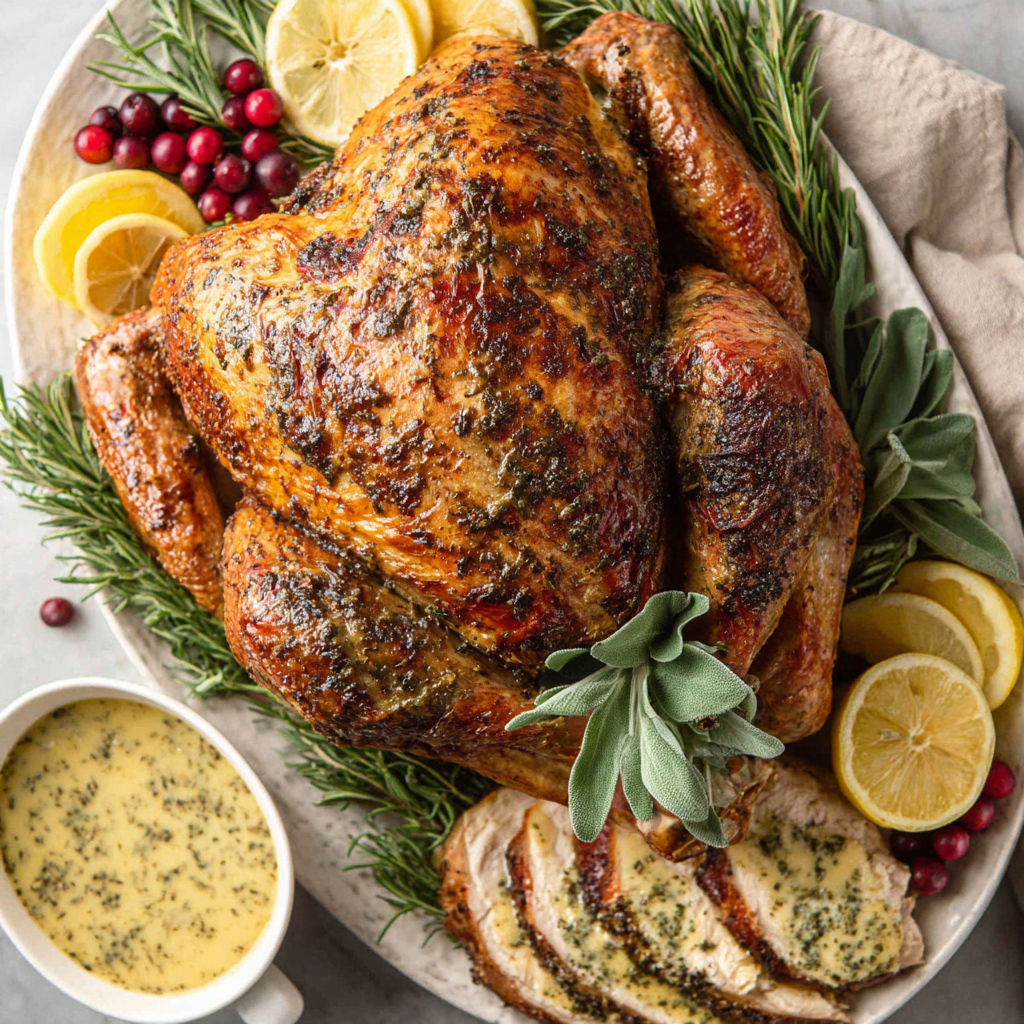
Celebrating Tradition with Herb Butter Roast Turkey
Ingredients
Method
- Prepare the turkey by thawing if necessary and preheating the oven.
- Make the herb butter mixture and season the turkey.
- Truss the turkey and place it in a roasting pan.
- Roast the turkey, basting every 30 minutes.
- Prepare the gravy while the turkey is roasting.
- Check the turkey's internal temperature and let it rest.
- Carve the turkey and serve with gravy.
Notes
Additional serving suggestions: pair with a crisp salad, garlic bread, or roasted seasonal vegetables for balance.
For make-ahead, prep components separately and assemble just before heating to preserve texture.
Taste and adjust with acid (lemon/vinegar) and salt right at the end to wake up flavors.


