Introduction
Tonkotsu ramen is a classic dish longing for a spot in your kitchen. Revered for its rich, creamy broth, this ramen style hails from Kumamoto, Japan, where it stands out for its decadent flavor.
Creating an authentic tonkotsu ramen may seem intimidating, but with the right ingredients and techniques, you can replicate that heartwarming bowl at home. Let’s dive into what makes this dish such a beloved choice among ramen enthusiasts.
Ingredients
- 2 lbs pork bones
Pork bones, particularly from the trotters and neck, release collagen when simmered, which contributes to the broth's silky texture. They provide a deep, meaty flavor crucial to tonkotsu's character. - 1 lb chicken carcass
Adding chicken carcass enhances the broth's complexity, giving additional depth and richness while balancing the pork's intensity. It also complements the umami notes that ramen lovers crave. - 1 onion, halved
Onions caramelize during cooking, adding subtle sweetness and depth. They help to elevate the overall flavor profile, making the broth rounded and inviting. - 4 garlic cloves, crushed
Garlic introduces a fragrant aroma and flavor that brightens the dish, cutting through the richness of the fats in the broth. It complements the savory elements beautifully. - 1-inch piece of ginger, sliced
Ginger adds warmth and a hint of spiciness, offsetting the sweetness of the onions. Its unique flavor brings brightness and serves to balance the richness. - 2 tablespoons soy sauce
Soy sauce brings saltiness and depth to the broth. Its savory profile is a must for achieving that authentic umami taste inherent in tonkotsu ramen. - 1 tablespoon miso paste
Miso paste contributes additional umami, enhancing the flavors of the broth. It also provides a subtle nuttiness, complementing the meatiness of the pork. - Ramen noodles (fresh or dried)
Ramen noodles serve as the base of the dish, soaking up the flavorful broth. Their chewy texture provides the perfect canvas for the rich toppings. - Soft-boiled eggs, for topping
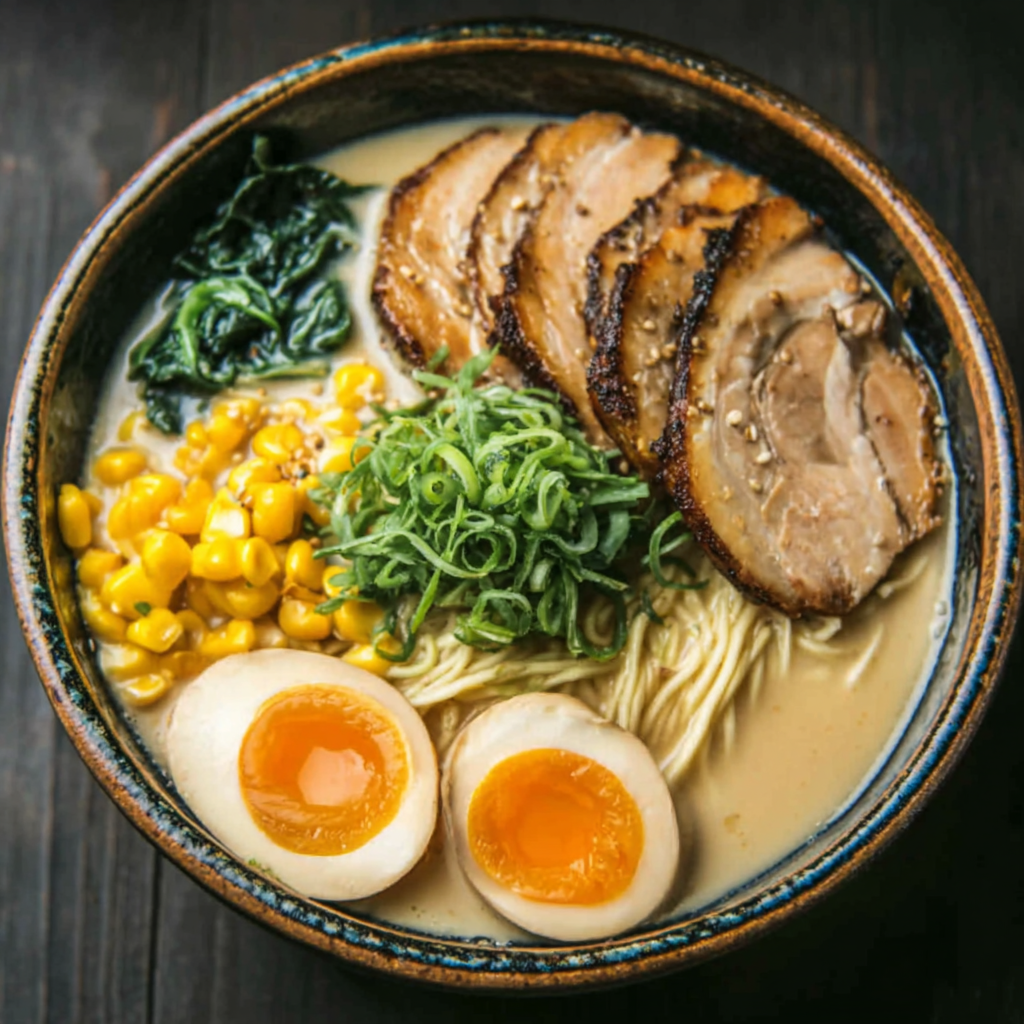
Soft-boiled eggs, with their creamy yolks, create a delightful richness that complements the broth. They also add an attractive visual contrast and textural interest. - Chopped green onions, for garnish
Green onions contribute freshness and a subtle crunch, brightening the overall dish. Their color and flavor add a necessary touch to balance the richness of the tonkotsu.
Directions & Preparation
Step 1: Prepare the bones for broth making
Begin by blanching the pork bones in boiling water for about 10 minutes. This process removes impurities that can cloud your broth and affect its flavor. Once boiled, drain and rinse the bones under cold water to clean them thoroughly. This step is crucial for achieving a clear, rich broth without any unpleasant flavors.
Step 2: Simmer the broth
In a large pot, combine the cleaned bones, chicken carcass, onion, garlic, ginger, and enough water to cover the ingredients. Bring it to a boil, then reduce to a simmer. Maintain this gentle simmer for at least 12 hours, preferably longer. This extended cooking time extracts maximum flavor from the bones, resulting in a creamy, delicious broth that is the hallmark of authentic tonkotsu ramen.
Step 3: Add seasonings
Towards the end of your simmering time, stir in the soy sauce and miso paste. Taste the broth and adjust the seasoning as needed. This is a vital step as it brings the dish to life, intermingling flavors to create that unique savory profile. Remember, the balance of flavors is key to a satisfying ramen experience.
Step 4: Prepare the noodles
While the broth simmers, cook the ramen noodles according to package instructions in another pot of boiling water. Drain and rinse with cold water to stop the cooking process and prevent them from becoming mushy. This step ensures the noodles retain their ideal chewy texture, which contrasts beautifully with the rich broth.
Step 5: Assemble the bowls
In serving bowls, add a generous portion of cooked ramen noodles and ladle the hot tonkotsu broth over them. Carefully place soft-boiled eggs that have been cut in half and sprinkle with chopped green onions. The presentation matters; it enhances your dining experience and shows that you’ve put care into the dish.
Step 6: Serve and enjoy
Serve your tonkotsu ramen immediately while hot. Encourage diners to mix everything together, allowing the flavors to meld beautifully. This dish is not just about eating; it’s about relishing every bite, so enjoy the harmony of flavors you’ve crafted.

The Art of Broth Making
The foundation of tonkotsu ramen lies in its broth, which is a labor of love. The longer you simmer the pork bones and chicken carcass, the more the flavors develop and meld together, creating that signature creamy richness. Color and texture improve dramatically with time, so patience is your greatest ally as flavors deepen and evolve.
Noodle Matters
Selecting the right noodles can significantly influence your ramen experience. Fresh, alkaline ramen noodles offer a distinctive chewiness that dried noodles struggle to match. If using dried noodles, be sure to cook them just right to maintain an al dente texture that holds up against the robust broth.
Perfecting Your Eggs
Achieving the ideal soft-boiled egg for your ramen can elevate it from good to extraordinary. Cooking them for around 6-7 minutes ensures the yolks remain creamy yet slightly runny. After cooking, plunge them into ice water to halt the cooking process, solidifying the egg whites while keeping that luscious yolk intact.
FAQs
What if my broth is too thick?
If the broth is thicker than desired, add hot water a little at a time to thin it out. This will help adjust the consistency while maintaining flavor.
How can I boost the flavor if it tastes bland?
If your broth lacks depth, consider adding more soy sauce or miso. A dash of salt can also enhance the overall flavor, but add it gradually to avoid oversalting.
Can I make this ramen vegetarian?
You can create a vegetarian version by using vegetable broth and substituting mushrooms for the meat. Consider adding seaweed for umami flavor.
What to do if my noodles are overcooked?
If your noodles become too soft, next time cook them al dente. Overcooked noodles can be unappetizing, so ensure they are drained promptly and cooled.
What substitutions can be made for miso?
You can substitute tahini or even a bit of peanut butter for a similar creamy consistency, but they will alter the flavor profile of the broth.
How can I adjust the spice level?
For a spicy kick, consider incorporating chili oil or sliced fresh chilies directly into the broth or as a garnish, tailoring it to your preferred heat level.
Conclusion
Crafting tonkotsu ramen at home is a rewarding culinary journey that pays off in flavor and satisfaction. As you savor that creamy broth, rich noodles, and perfect toppings, you’ll appreciate the time and love invested in this iconic dish.
With practice, you can personalize your ramen experience, making it your very own signature bowl that friends and family will rave about for years to come.
Recipe Card
Notes
Additional serving suggestions: pair with a crisp salad, garlic bread, or roasted seasonal vegetables for balance.
For make-ahead, prep components separately and assemble just before heating to preserve texture.
Taste and adjust with acid (lemon/vinegar) and salt right at the end to wake up flavors.


