Introduction
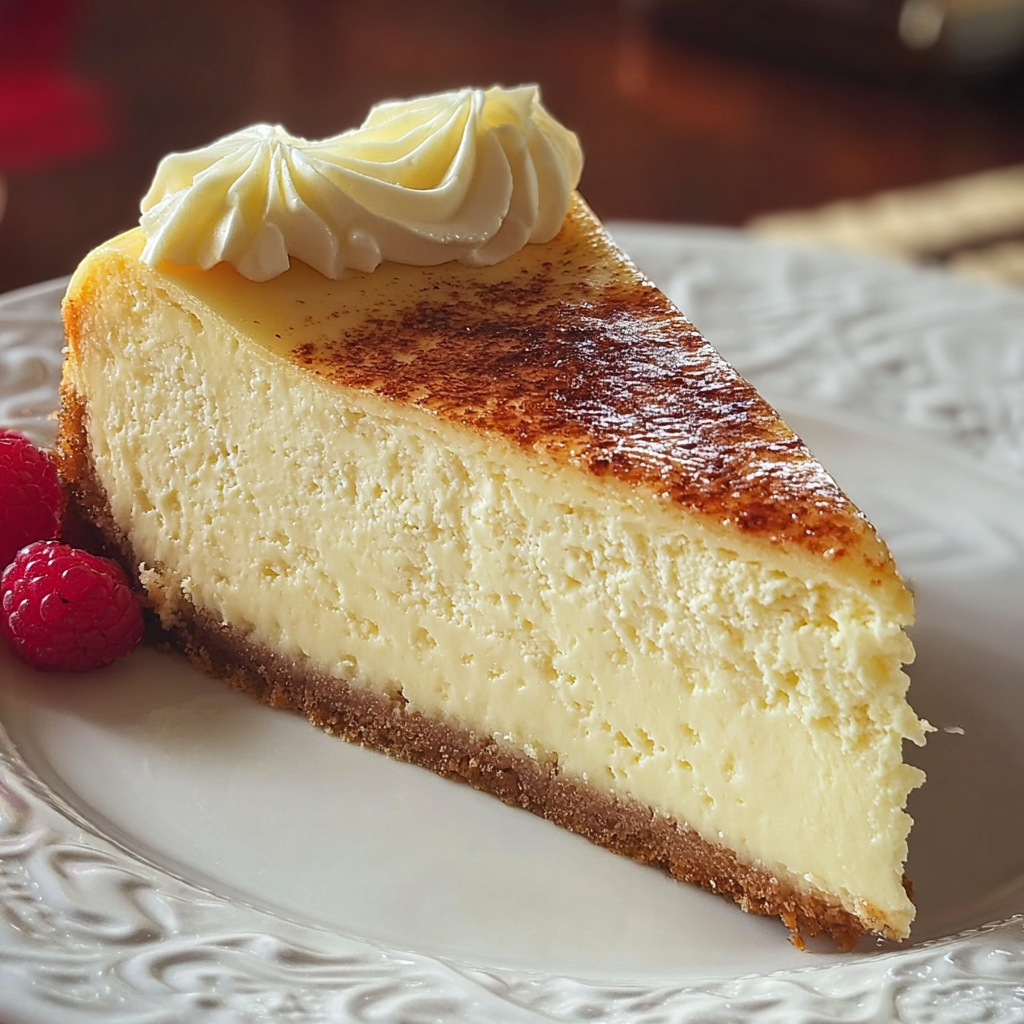
Cheesecake is a dessert that transcends time and place, but Classic New York-Style Cheesecake holds a special place in many hearts (and stomachs). With its rich, creamy filling and buttery crust, this dessert embodies indulgence, making it a favorite for many celebrations and special moments.
Creating an authentic New York-Style Cheesecake at home may seem daunting, but it doesn’t have to be. With the right balance of ingredients and techniques, you can turn your kitchen into a little slice of New York, bringing together friends and family over a dessert that’s sure to impress.
Ingredients
- 10 graham crackers, crushed
Graham crackers form the basis of the crust, providing a sweet and slightly nutty flavor that complements the creamy filling. Their texture gives the base a satisfying crunch. - 1/4 cup granulated sugar
Sugar adds sweetness to the crust and balances the flavors of the filling. It also contributes to the overall texture of the cheesecake, helping it to maintain a smooth consistency. - 1/2 cup unsalted butter, melted
Butter not only binds the graham cracker crumbs together but also enriches the crust with a rich flavor. It gives a depth that enhances the overall mouthfeel of the dessert. - 4 packages (8 oz each) cream cheese, softened
The star of the cheesecake, cream cheese provides the rich, creamy texture that New York cheesecakes are known for. It’s essential for achieving that dense yet smooth filling. - 1 cup granulated sugar
This sugar sweetens the filling, balancing the tanginess of the cream cheese. The amount is crucial to avoid overpowering the other flavors while maintaining that signature sweetness. - 4 large eggs, at room temperature
Eggs contribute structure and stability to the cheesecake. They not only help set the filling but also add richness and moisture, resulting in a velvety texture. - 1 teaspoon pure vanilla extract
Vanilla extract adds a warm, aromatic flavor that enhances the overall taste of the cheesecake. It rounds out the flavors beautifully, making every bite delightful. - 1 tablespoon lemon juice
Lemon juice brightens the flavors and adds a subtle tartness that cuts through the richness of the cream cheese. It’s a crucial component for achieving the balanced taste.
Directions & Preparation
Step 1: Preheat the oven to 325°F (160°C).
Preheating the oven ensures that your cheesecake cooks evenly from the start. This is essential for a dessert that requires a perfectly set filling without overcooking the edges.
Step 2: Prepare the crust by mixing crushed graham crackers, sugar, and melted butter in a medium bowl.
Mixing these ingredients creates a damp, sandy texture that will hold together nicely when pressed into the pan. Make sure all crumbs are evenly coated with butter to ensure a uniform crust.
Step 3: Press the mixture firmly into the bottom of a springform pan to form an even layer.
Pressing the mixture tightly is key to achieving a sturdy crust that can hold the cheesecake filling. Use the bottom of a measuring cup for even pressure and to compact the crust well.
Step 4: Bake the crust in the preheated oven for 10 minutes, then remove and let cool.
Baking the crust helps it set and provides a deeper flavor through slight toasting. Allowing it to cool also helps prevent the filling from melting when poured on top.
Step 5: In a large mixing bowl, beat the cream cheese until smooth and creamy using an electric mixer.
This step is crucial for avoiding lumps in your cheesecake. Start on low speed and gradually increase, ensuring all parts of the cream cheese are whipped to a creamy texture.
Step 6: Gradually add sugar while continuing to beat, until fully incorporated and smooth.
Adding sugar slowly helps it dissolve properly into the cream cheese. This will prevent grittiness in the final product, leading to a smooth and rich filling.
Step 7: Add eggs, one at a time, mixing on low speed just until blended after each addition.
Incorporating the eggs gradually prevents overmixing, which can lead to a cracked cheesecake as it bakes. The goal is to keep air from getting trapped in the mixture.
Step 8: Mix in the vanilla extract and lemon juice until just combined.
This final addition rounds out the flavors in your cheesecake. Be careful not to overmix, as this can also introduce excess air and cause cracking during baking.
Step 9: Pour the cream cheese mixture over the crust in the springform pan.
Gently pouring allows the filling to settle evenly on the crust without disrupting its surface. It's a delicate phase that leads to a beautifully layered cheesecake.
Step 10: Bake for 50-60 minutes, until the center is set but slightly jiggly.
Baking until the center is just slightly jiggly ensures the cheesecake will firm up as it cools. Overbaking can result in a dry texture and unsightly cracks.
Step 11: Turn off the oven, crack the door open, and let the cheesecake cool in the oven for an hour.
This technique helps prevent sudden temperature changes, which can cause the cheesecake to crack. Gradual cooling maintains that smooth texture.
Step 12: Remove the cheesecake from the oven and chill in the refrigerator for at least 4 hours, or overnight for best results.
Chilling allows the cheesecake to firm up and enhances the flavors, giving it that characteristic taste. Patience here is key for a perfect outcome.
Step 13: Once chilled, carefully remove the springform pan and serve as is or with your favorite toppings.
Removing the pan carefully prevents any damage to the edges of your cheesecake. Enjoy it plain, or dress it up with fruits or sauces for an extra touch.

The Importance of Quality Ingredients
The success of a classic New York cheesecake significantly hinges on the quality of its ingredients. Opting for real cream cheese rather than lower-fat options ensures a rich and satisfying texture. Equally, using freshly squeezed lemon juice instead of bottled enhances the overall flavor profile, making every bite irresistibly delightful.
Understanding the Baking Process
Baking a cheesecake is a delicate balance of time and temperature. An oven that is too hot or a baking duration that is too long can lead to dryness and cracking. By allowing the cheesecake to cool gradually in the oven, you help it set perfectly while maintaining a creamy consistency, which is key to a restaurant-quality dessert.
Creative Topping Options
While a classic New York-style cheesecake shines on its own, there are myriad topping options to enhance its appeal. Fresh berries and a drizzle of fruit compote contrast beautifully with the creaminess of the cheesecake. Alternatively, a glossy ganache can be applied for a decadent finish, taking this beloved dessert to new heights.
FAQs
What contributes to the New York cheesecake's signature density?
The density comes primarily from the use of cream cheese and the proportion of eggs, which create a rich, thick filling.
Why is my cheesecake cracking on top?
Cracking often results from baking at too high a temperature or from sudden cooling. Gradual cooling helps prevent this.
Can I use a different type of crust instead of graham crackers?
Yes, you can experiment with other types of cookies like digestive biscuits or even a chocolate cookie crust for a different flavor profile.
What should I do if my filling is too thick?
If the filling is too thick, a little extra cream or milk can be added to loosen it. Mix cautiously to maintain a smooth texture.
How can I ensure my cheesecake is perfectly smooth?
Make sure to beat the cream cheese thoroughly and add eggs at room temperature, which helps incorporate them more smoothly.
What’s the best way to serve this cheesecake?
This cheesecake can be served plain, but fresh fruit or sauces like caramel or chocolate add great flavor contrast.
Can I add flavors like chocolate or caramel to the filling?
Absolutely, you can swirl in melted chocolate or caramel to add depth to the flavor while still keeping the classic nature of the cheesecake.
Conclusion
Making a classic New York-Style Cheesecake at home is not just about the end product; it's also about the process and the joy that comes with it. From mixing to baking, each step requires care and attention, ensuring that you produce a dessert that’s worth savoring.
With this recipe, you are equipped to create a cheesecae that would impress any New Yorker. So roll up your sleeves and indulge your culinary skills; a slice of this cheesecake awaits your expert touch.
Recipe Card
Notes
Additional serving suggestions: pair with a crisp salad, garlic bread, or roasted seasonal vegetables for balance.
For make-ahead, prep components separately and assemble just before heating to preserve texture.
Taste and adjust with acid (lemon/vinegar) and salt right at the end to wake up flavors.


