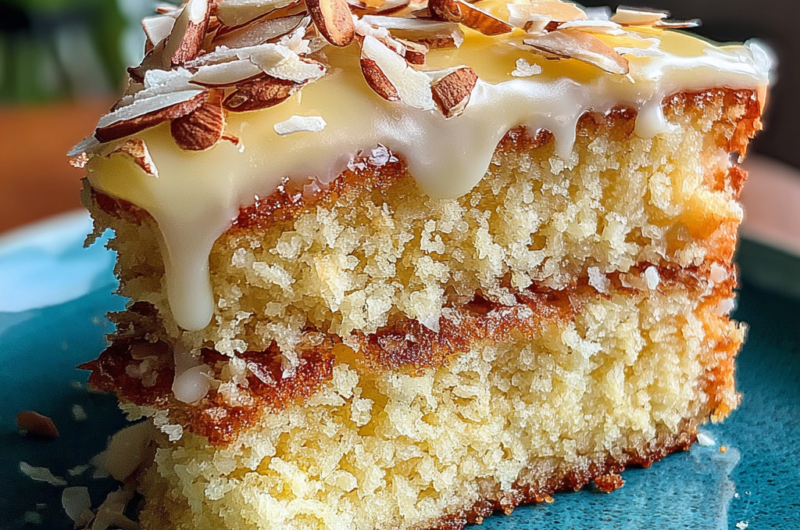
Introduction
Coconut and almond are a magical combination, playing well together in many desserts. This Coconut Almond Cake brings a delightful twist to your traditional cake with its moist texture and irresistible flavor. Perfect for gatherings or a weekend treat, it promises to be the centerpiece of any dessert table.
Baking this cake will not only fill your kitchen with an enticing aroma but also create a comforting experience as you blend the tropical notes of coconut with the rich, nutty essence of almonds. In this recipe, you will create a cake that is light yet rich, sweet yet balanced, making it indulgent without feeling overwhelming.
Ingredients
- 2 cups all-purpose flour
Flour gives structure to the cake, providing the base that becomes the crumb. Using all-purpose flour ensures a light and tender texture, allowing the flavors of the coconut and almond to shine. - 1 cup granulated sugar
Sugar not only sweetens the cake but also contributes to the overall moisture. When creamed with butter, sugar helps create air pockets that give the cake its desirable rise. - 1/2 cup unsalted butter, softened
Butter enriches the cake, providing a creamy texture and a delicious flavor. Softened butter allows for better incorporation with sugar, resulting in a light and fluffy batter. - 3 large eggs
Eggs add moisture and richness while also acting as a binder, giving the cake structure. Their proteins help in leavening, which makes the cake rise during baking. - 1 cup coconut milk
Coconut milk contributes a tropical flavor and additional moisture, ensuring the cake remains tender. This ingredient enhances the overall coconut experience. - 1 cup shredded coconut
Shredded coconut adds texture and flavor, delivering that unmistakable coconut bite in every slice. It enhances the cake's chewiness and invites a delightful visual appeal. - 1/2 cup finely ground almonds
Ground almonds contribute a nutty taste and help keep the cake moist. They provide a unique richness that pairs beautifully with the other ingredients. - 1 teaspoon baking powder
Baking powder acts as a leavening agent, helping the cake to rise and develop a light texture. It's essential for achieving airy and fluffy results. - 1/2 teaspoon salt
Salt balances sweetness and enhances overall flavor. It is a crucial component that brings out the other flavors of the cake, making each bite more delicious. - 1 teaspoon vanilla extract
Vanilla extract adds a depth of flavor, rounding out the sweet and nutty notes. A touch of vanilla can elevate the dish, making it more aromatic.
Directions & Preparation
Step 1: Preheat your oven to 350°F (175°C).
Preheating the oven ensures that your cake bakes evenly from the moment it's placed inside. Baking in a consistent temperature is crucial for achieving the right texture and rise.
Step 2: Grease and flour two 9-inch round cake pans.
Properly greasing and flouring the pans prevents the cake from sticking and makes for easy removal after baking. This step will save you frustration and ensure your cake retains its shape.
Step 3: In a large mixing bowl, cream together the softened butter and granulated sugar until light and fluffy.
Creaming butter and sugar is vital for incorporating air into your batter, resulting in a light texture. Mix on medium speed for about 3-5 minutes until the mixture looks pale and has increased in volume.
Step 4: Add the eggs, one at a time, mixing well after each addition.
Incorporating eggs one at a time ensures that they are fully absorbed, creating a uniform batter. This step is important for achieving a consistent texture throughout the cake.
Step 5: Stir in the coconut milk and vanilla extract until combined.
Adding coconut milk and vanilla infuses moisture and flavor into your batter. Ensure everything is well combined, but do not overmix, as that can lead to a denser cake.
Step 6: In a separate bowl, whisk together the flour, baking powder, ground almonds, and salt.
Whisking the dry ingredients together beforehand helps distribute the baking powder evenly throughout the flour. This step is crucial for ensuring even leavening and preventing any pockets of dry ingredients.
Step 7: Gradually fold the dry ingredients into the wet mixture, being careful not to overmix.
Folding the dry ingredients maintains the airiness of the batter, which is critical for a light cake. Gentle mixing helps preserve the delicate structure created during the creaming process.
Step 8: Gently fold in the shredded coconut until just combined.
Incorporating shredded coconut last ensures it is evenly dispersed without disrupting the cake's light texture. This step adds both flavor and a delightful texture to the final product.
Step 9: Divide the batter evenly between the prepared cake pans and smooth the tops.
Ensuring equal distribution of batter in the pans allows for even baking. Smoothing the tops helps create a nice surface for decorating later, should you choose to frost your cake.
Step 10: Bake in the preheated oven for 25-30 minutes or until a toothpick inserted in the center comes out clean.
Baking until just done prevents overcooking, which can lead to dryness. Checking with a toothpick gives you a reliable indicator; the cake should spring back when lightly touched.
Step 11: Allow the cakes to cool in the pans for 10 minutes before transferring them to a wire rack to cool completely.
Cooling in the pans for a short time helps set the structure, making it easier to transfer. Once on the rack, cooling completely prevents melting any frosting you may choose to add.

Elevating Flavor with Natural Coconut Essence
Using coconut milk and shredded coconut together creates a multi-layered flavor profile that enhances the cake's moistness. This combination introduces both liquid and textured coconut notes which make every bite rich and satisfying. Consider toasting the coconut before adding for an extra depth of flavor, adding a subtle nuttiness that contrasts beautifully with the sweetness.
The Role of Almonds in Texture and Taste
Incorporating finely ground almonds into the cake batter not only enriches it with a nutty aroma, but also contributes to a moist texture that stands out. Almond flour can often replace a portion of the all-purpose flour to create a denser cake. Moreover, the subtle almond flavor pairs seamlessly with coconut, making this cake an unforgettable experience.
Decorating Your Coconut Almond Cake
Once cooled, you can choose to finish the cake simply with a dusting of powdered sugar or a light drizzle of coconut glaze. Garnishing with toasted coconut flakes and slivers of almonds can add visual appeal and crunch to each slice. For a more decadent approach, a creamy coconut buttercream can elevate your cake further, pairing perfectly with the existing flavors.
FAQs
What can I do if my cake is too dense?
If your cake turns out too dense, it could be due to overmixing the batter or not incorporating enough air while creaming the butter and sugar. To prevent this, ensure you mix just until combined and gently fold in the dry ingredients.
Is it possible to adjust the sweetness of this cake?
Yes, if you find the cake too sweet for your taste, consider reducing the sugar by a quarter cup and adding a small amount of additional coconut milk for moisture. This way, you can tailor it to your preferences without compromising texture.
Can I use desiccated coconut instead of shredded?
Desiccated coconut can be used in place of shredded coconut, but it may result in a different texture. Shredded coconut offers a chewier bite, while desiccated coconut is finer and could integrate more into the cake.
What should I do if my batter is too thin?
If your batter appears too thin, you can add a bit more flour, one tablespoon at a time, until you reach the desired consistency. Be cautious not to add too much, as this can affect the cake texture.
Can I bake this cake in a different size pan?
You can use different sized pans, but cooking times will vary. Adjust your baking time accordingly and check for doneness by inserting a toothpick; it should come out clean.
How can I enhance the almond flavor in the cake?
To intensify the almond flavor, consider incorporating almond extract in addition to vanilla. A teaspoon should suffice to give that distinct nutty aroma without overpowering the coconut.
Conclusion
Baking a Coconut Almond Cake creates more than just a delicious dessert—it’s an experience that brings warmth and joy. The unique blend of coconut and almond in every bite is an invitation to savor life’s sweet moments.
Whether you choose to enjoy it simply or dressed up for special occasions, this cake makes a memorable addition to any meal. Embrace your culinary creativity and dive into the delightful world of flavors that this cake has to offer.
Recipe Card
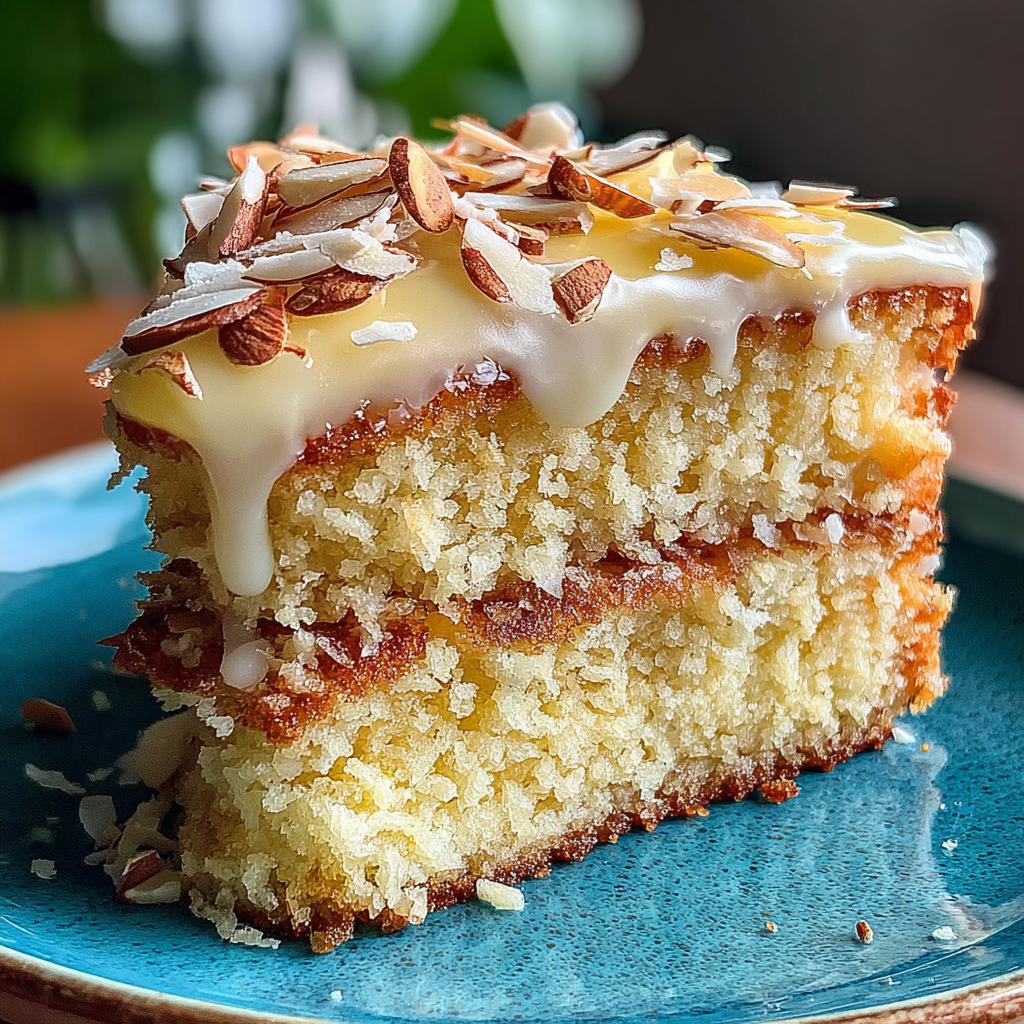
Indulge in a Delicious Coconut Almond Cake
Ingredients
Method
- Preheat your oven to 350°F (175°C).
- Grease and flour two 9-inch round cake pans.
- In a large mixing bowl, cream together the softened butter and granulated sugar until light and fluffy.
- Add the eggs, one at a time, mixing well after each addition.
- Stir in the coconut milk and vanilla extract until combined.
- In a separate bowl, whisk together the flour, baking powder, ground almonds, and salt.
- Gradually fold the dry ingredients into the wet mixture, being careful not to overmix.
- Gently fold in the shredded coconut until just combined.
- Divide the batter evenly between the prepared cake pans and smooth the tops.
- Bake in the preheated oven for 25-30 minutes or until a toothpick inserted in the center comes out clean.
- Allow the cakes to cool in the pans for 10 minutes before transferring them to a wire rack to cool completely.
Notes
Additional serving suggestions: pair with a crisp salad, garlic bread, or roasted seasonal vegetables for balance.
For make-ahead, prep components separately and assemble just before heating to preserve texture.
Taste and adjust with acid (lemon/vinegar) and salt right at the end to wake up flavors.


