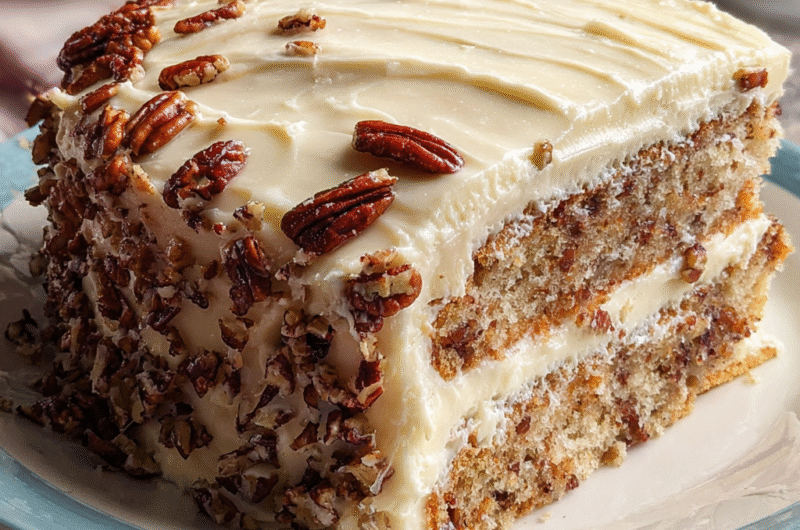
Introduction
There's something undeniably comforting about the aroma of freshly baked cake wafting through the house. This Homemade Butter Pecan Cake is a delightful fusion of rich buttery flavor and crunchy pecans, making it a perfect treat for any occasion. Whether you're celebrating a birthday or simply enjoying a cozy afternoon, this cake speaks the language of warmth and indulgence.
With a moist crumb and a buttery frosting that perfectly complements the nutty notes, this cake is sure to impress your family and friends. Each slice offers a delightful crunch from the toasted pecans while being enveloped in a tender cake that melts in your mouth. Follow along and embrace the joy of baking this timeless classic from scratch.
Ingredients
- 2 cups all-purpose flour
All-purpose flour serves as the foundation of the cake, providing structure and stability. It allows the cake to rise properly and creates a satisfying crumb, resulting in a desirable texture. - 1 1/2 cups granulated sugar
Granulated sugar sweetens the cake and contributes to its overall moisture. It ensures a balanced flavor and aids in achieving a tender crumb by fostering the right amount of air during the creaming process. - 1/2 cup unsalted butter, softened
Butter is essential in providing a rich flavor and a moist texture. When creamed with sugar, it creates an airy batter that contributes to a light, fluffy cake. - 1 cup buttermilk
Buttermilk adds moistness and a subtle tanginess to the cake, enhancing the overall flavor profile. Its acidity reacts with the baking soda to create a tender texture, helping the cake rise well. - 3 large eggs
Eggs are crucial for binding ingredients together, providing moisture, and incorporating air into the batter. They contribute to the cake's overall structure and richness. - 1 teaspoon vanilla extract
Vanilla extract offers an aromatic flavor that elevates the taste of the cake. It complements the buttery and nutty elements, adding depth to the cake's profile. - 1 teaspoon baking powder
Baking powder is a leavening agent, responsible for the cake's rise. It releases carbon dioxide when activated, creating air pockets in the batter for a light and airy texture. - 1/2 teaspoon baking soda
Baking soda also acts as a leavening agent, working in tandem with the buttermilk's acidity. It helps ensure the cake rises evenly and prevents it from being dense. - 1/2 teaspoon salt
Salt enhances the flavors of the cake, balancing the sweetness. It plays a role in strengthening the cake’s structure by tightening the gluten formed in the flour. - 1 cup pecans, chopped and toasted
Pecans add a wonderful crunch and rich, nutty flavor to the cake. Toasting them enhances their natural oils and aroma, infusing the cake with a deep, toasted nut flavor.
Directions & Preparation
Step 1: Preheat the oven to 350°F (175°C) and prepare your cake pans.
Preheating the oven ensures that your cake begins to cook immediately upon being placed inside. Preparing the cake pans by greasing and lining them with parchment paper prevents sticking and ensures a clean release, which is vital for perfect cake layers.
Step 2: In a large mixing bowl, cream the butter and sugar together until light and fluffy.
Creaming the butter and sugar properly is essential as it incorporates air into the mixture, providing the lift needed for a light cake. Aim for a pale, fluffy consistency, which typically takes around 3-5 minutes. This process allows the granulated sugar to help dissolve the butter, integrating well.
Step 3: Add the eggs one at a time, mixing well after each addition.
Adding the eggs gradually promotes an even mixture, allowing each egg to fully integrate. This process helps to maintain the emulsion created and ensures a uniform batter, which contributes to the cake's structure and moistness.
Step 4: In a separate bowl, combine the dry ingredients: flour, baking powder, baking soda, and salt.
Combining the dry ingredients ensures that the leavening agents are evenly distributed throughout the flour, which prevents uneven rising during baking. This step is often overlooked but is key in achieving a consistent texture in the final cake.
Step 5: Gradually add the dry mixture to the creamed butter and sugar, alternating with the buttermilk.
Adding the dry ingredients in increments helps prevent overwhelming the batter with flour, which can result in a dense cake. Alternating with buttermilk maintains moisture while ensuring the batter is mixed just enough to combine without overworking it.
Step 6: Stir in the toasted pecans and vanilla extract until evenly distributed.
Incorporating the pecans and vanilla at this stage enhances the flavor throughout the batter. Stir gently to avoid breaking up the nuts too much, ensuring they remain crunchy in the final baked cake.
Step 7: Divide the batter evenly between the prepared cake pans.
Dividing the batter evenly ensures that the cakes bake at the same rate and results in uniform layers. Using a kitchen scale can help achieve precise measurements, or you can use a spatula to spread it evenly if you don’t have one.
Step 8: Bake in the preheated oven for 25-30 minutes or until a toothpick comes out clean.
Baking time is important; keep an eye on your cakes as they near the end of cooking. A toothpick inserted in the center should come out clean or with a few moist crumbs. This indicates that the cakes are fully baked without being overcooked, which could dry them out.
Step 9: Allow the cakes to cool in the pans for 10 minutes before transferring to a wire rack.
Cooling the cakes briefly in their pans allows them to set up and prevents them from breaking apart during transfer. After 10 minutes, moving them to a wire rack enables proper air circulation around the cakes, preventing sogginess.
Step 10: Once completely cool, frost with buttercream frosting and garnish with additional chopped pecans, if desired.
Frosting while the cake is too warm can cause the icing to melt, resulting in a less visually appealing finish. Using buttercream complements the richness of the cake and the added pecans on top provide an appealing touch and extra crunch, making each slice irresistible.

The Importance of Toasting Pecans
Toasting pecans is a simple step that can greatly enhance the flavor profile of your Homemade Butter Pecan Cake. This process not only intensifies the nutty taste but also releases aromatic oils that elevate the overall sensory experience. A quick toast in the oven or on the stovetop makes a significant difference, adding depth and richness to each bite.
Crafting the Perfect Buttercream Frosting
Creamy buttercream frosting is a natural pairing with the rich flavors of the butter pecan cake. The key is to achieve a smooth, spreadable consistency without being grainy. Be sure to cream your butter sufficiently before gradually adding confectioners’ sugar, and don't forget to incorporate a splash of vanilla for added flavor. The resulting frosting should be fluffy, enhancing the cake without overpowering it.
Serving Suggestions for Your Cake
This Homemade Butter Pecan Cake can stand alone as a dessert or be served with a dollop of freshly whipped cream or a scoop of vanilla ice cream for extra indulgence. Pairing with coffee or tea can heighten the cake's flavors, too. Adding a sprinkle of sea salt on top can create a delightful contrast to the sweetness, bringing a sophisticated touch to your dessert experience.
FAQs
What can I do if my cake has sunken centers?
Sunken centers can occur from underbaking or opening the oven door too early. Ensure you check for doneness with a toothpick before the timer goes off, and avoid opening the oven door until at least the last 10 minutes of baking.
Can I substitute the buttermilk for yogurt?
Yes! Yogurt can be a great substitute for buttermilk. You can thin it with a little milk or water to reach a similar consistency and acidity level.
Why did my cake turn out too dense?
A dense cake can result from overmixing the batter or using too much flour. Make sure to spoon and level your flour, and mix just until the ingredients are combined to avoid developing excess gluten.
What if I want a stronger pecan flavor?
For a more pronounced pecan flavor, you can increase the amount of chopped pecans in the recipe or even incorporate pecan extract for an extra boost.
How can I adjust the sweetness if it’s too sweet?
If you find the cake too sweet for your taste, consider reducing the sugar by 1/4 cup and balancing it with a hint more salt in the batter to enhance the other flavors.
How do I know when the cake is fully baked?
The cake is done when a toothpick inserted in the center comes out clean or with a few crumbs. The edges should also begin to pull away from the sides of the pan slightly.
Can I use unsalted butter for the frosting?
Yes, unsalted butter is typically preferred in frosting to control the overall saltiness. Just be sure to balance flavors accordingly if your cake is already salted.
What if the batter seems too thin?
If your batter appears too thin, it could be a result of over-mixing or using too much liquid. You can try adding a tablespoon of flour at a time until you reach a thicker consistency.
Conclusion
Baking a Homemade Butter Pecan Cake is not just a culinary task; it's a wonderful way to show love and care through food. Each bite embodies a combination of rich butter flavor and the delightful crunch of pecans, reminding us of comforting family traditions.
This cake is not just a recipe; it’s an experience that invites creativity in the kitchen. As you gather loved ones around to enjoy this sweet creation, remember that every homemade cake tells a story, and the joy of sharing it is what truly makes it special.
Recipe Card
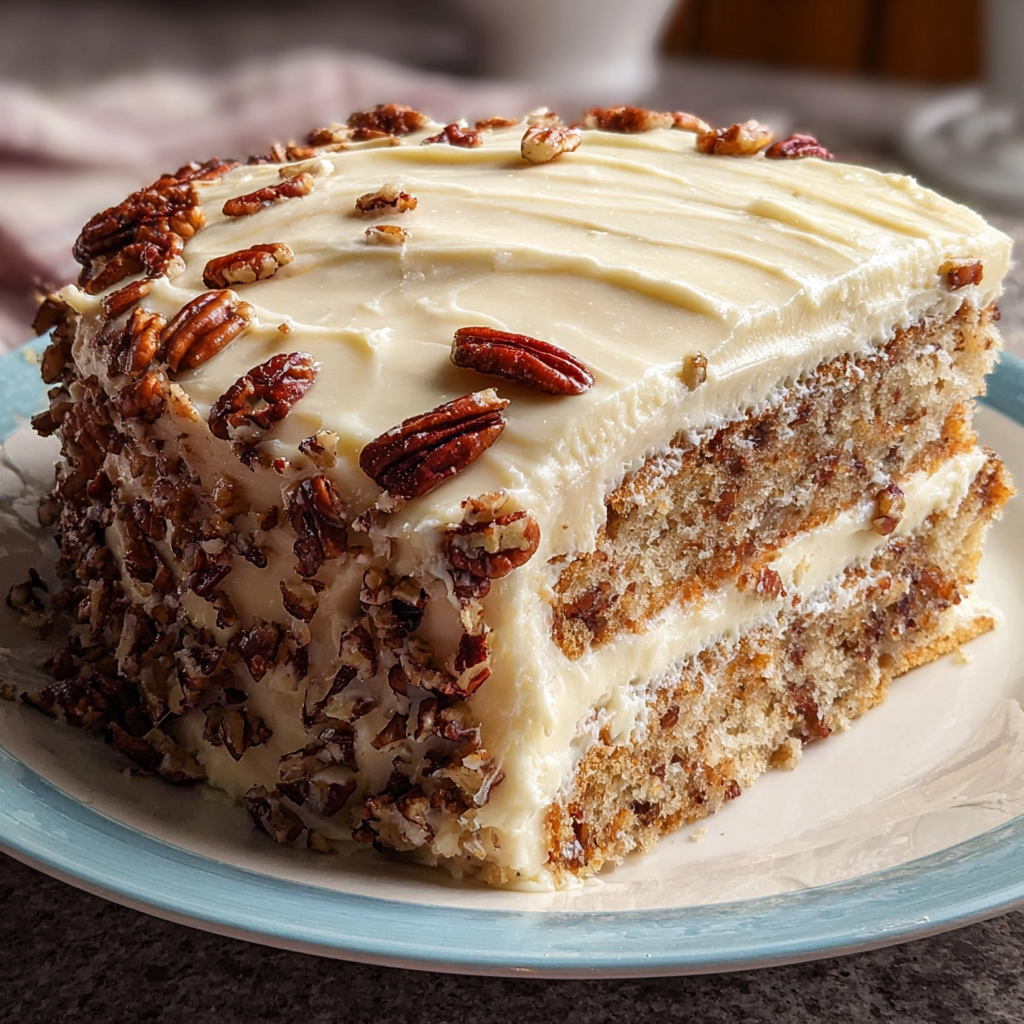
Deliciously Crafted Homemade Butter Pecan Cake
Ingredients
Method
- Preheat the oven to 350°F (175°C) and prepare your cake pans.
- In a large mixing bowl, cream the butter and sugar together until light and fluffy.
- Add the eggs one at a time, mixing well after each addition.
- In a separate bowl, combine the dry ingredients: flour, baking powder, baking soda, and salt.
- Gradually add the dry mixture to the creamed butter and sugar, alternating with the buttermilk.
- Stir in the toasted pecans and vanilla extract until evenly distributed.
- Divide the batter evenly between the prepared cake pans.
- Bake in the preheated oven for 25-30 minutes or until a toothpick comes out clean.
- Allow the cakes to cool in the pans for 10 minutes before transferring to a wire rack.
- Once completely cool, frost with buttercream frosting and garnish with additional chopped pecans, if desired.
Notes
Additional serving suggestions: pair with a crisp salad, garlic bread, or roasted seasonal vegetables for balance.
For make-ahead, prep components separately and assemble just before heating to preserve texture.
Taste and adjust with acid (lemon/vinegar) and salt right at the end to wake up flavors.


